Influence of river flow and temperature on O. mykiss

Our work has focused on understanding the influence of river flows (magnitude and timing) as well as its temperature on O. mykiss. O. mykiss are partially migratory, with some individuals migrating to the ocean before returning to the river to breed, and other individuals spending their entire lives in freshwater. Our key recent discoveries include that (1) both geomorphology (knick points) and river flows influence the distribution of migratory adults (high river flows at the right time facilitate upriver passage of migrating adults, Kelson et al. 2020 Molecular Ecology). Moreover, we have found that partial migration in O. mykiss (2) is influenced both by sex (females are more likely to migrate) and genotype (individuals with a migratory-genotype are more likely to migrate, Kelson et al. 2019 Canadian Journal of Fisheries and Aquatic Sciences) and (3) that partial migration has ecological consequences (in stream reaches where migratory genotypes dominated, we’ve found higher densities of young fish and lower densities of older fish, resulting in a simpler size structure, compared to when resident genotypes dominated, Kelson et al. 2020 Ecosphere). Finally, we have explored the importance of cold water plumes in warm mainstem rivers, created by cool tributary in-flows, as thermal refugia for cold-water fishes like salmonid fishes (Wang et al. 2020 River Research and Applications). Stephanie is a professor in Environmental Science, Policy, and Management at UC Berkeley.
Gabe Rossi
Gabe Rossi, for his Ph.D. research at Angelo, explored how rearing juvenile O. mykiss (steelhead or rainbow trout) responded to seasonal interactions of their physical river habitat during spring flow recession and summer baseflow, and prey phenology. O. mykiss are typically considered drift foragers, yet persist in Mediterranean coastal streams with seasonally low velocity and drift. Using novel 3-D videogrammetry along with measurements of invertebrate drift and stream hydraulics, Gabe quantified the seasonality of foraging behaviors of O. mykiss employ during the spring-summer flow recession, documenting their shift from spring drift foraging to summer nomadic foraging. Foraging mode was significantly correlated with maximum water velocity and to riffle crest depth, and shifts were best predicted by interacting hydraulic variables and drift concentration. Non-drifting prey fluxes, as well as risk aversion, appear to influence the steelhead’s late- summer foraging decisions.
Gabe’s research colleagues in the Eel River Critical Zone Observatory, and with Mariska Obedzinksi, Ted Grantham, and Stephanie Carlson in Environmental Science, Policy, and Management at UCB, contrasts two distinct seasonal rearing regimes for salmonids in northwestern California streams: perennial, cool, and shaded, like Elder Creek in the Angelo Reserve, versus intermittent, seasonally warm, and sunny streams, like tributaries of the Russian River, or of the mainstem Eel where channels flow through mélange rather than deep shale bedrock (Dralle et al. 2023). Early season growth is more rapid in the warmer seasonally intermittent streams, but abiotic conditions grow intolerable later in the summer, whereas the perennial streams maintain suitable conditions year round. These contrasts have motivated Gabe, Stephanie, and other salmonid researchers to hypothesize that juvenile O. mykiss life histories should differ among streams.
Gabe and a number of other colleagues have proposed a conceptual “FoodScape” model for how shifting mosaics of habitat conditions and food production interact to affect foraging profitability for juvenile salmon as they traverse drainage networks during their freshwater life histories. Examples of salmonid responses to a wide variety shifting mosaics in rivers of western North America motivated a song intended to convey the point of view of a juvenile salmonid navigating its river FoodScape (see Supplemental Information 1 in Rossi et al. 2024).
Gabe was a Ph.D. student with Mary Power at UCB and is currently a Research Scientist with the Ecosystem Sciences Division at UC Berkeley and a California Trout Coastal River Ecologist.
Spring temp. and upstream migration timing of invasive Pikeminnow in Eel River
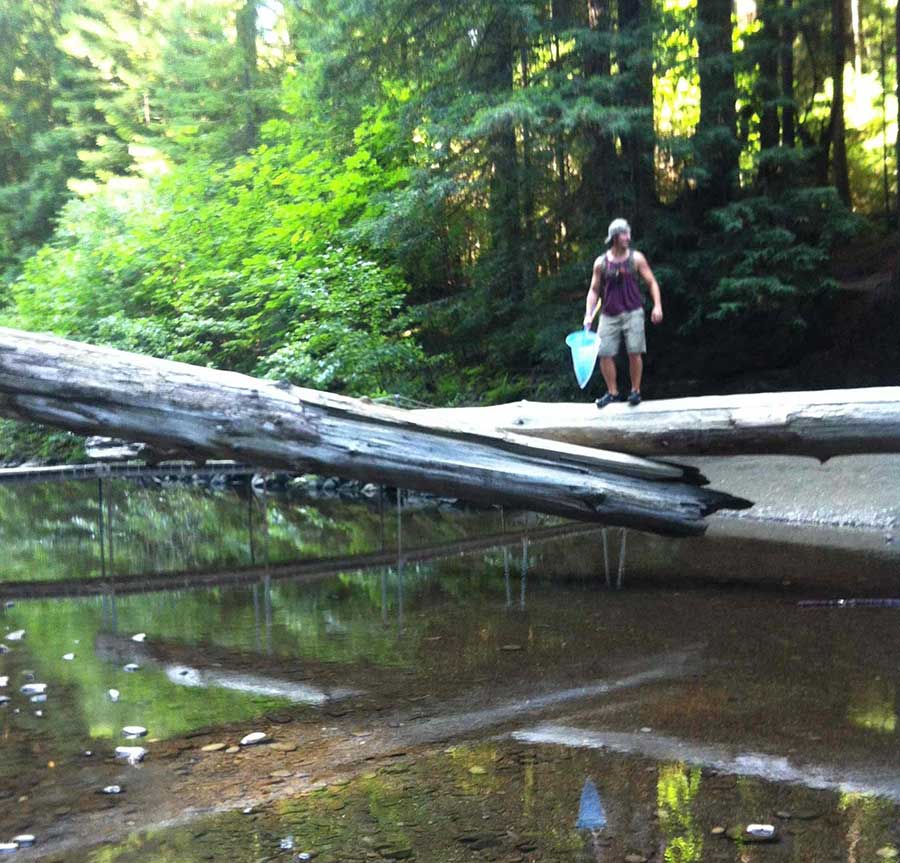
Phil Georgakakos studies the distribution of fish and other aquatic vertebrates and their interactions across riverscapes, and how they shift in response to environment conditions, resources, particularly in the context of a changing climate. The historical aquatic vertebrate assemblage of the Eel River has shifted largely in response to overfishing, habitat destruction, and other human-induced activities, and there have been numerous non-native species introductions- notably, the invasive Sacramento Pikeminnow.

As part of his PhD work, Phil conducted repeated snorkel surveys over a five year period at the Eel River in order to investigate patterns of variation in the aquatic vertebrate community through time and space. This study constitutes one of the most extensive survey efforts in space, time, and species of animal counted in a coastal California river. Generally, Phil has found that invasive animals were more abundant in downstream reaches and slower water habitats. Populations of native species tended to be denser upstream, especially in late summer, when invasive numbers are high downstream.
Identifying the drivers that favor native species expansion downstream can help guide restoration efforts hoping to shift assemblages towards more desirable historical states. Phil’s particular observations of the invasive Sacramento Pikeminnow migrating upstream during Spring and early Summer led him and collaborator David Dralle to develop a statistical model to forecast the timing and extent of upstream migration by pikeminnow in response to discharge and air temperature. In years with low flow and high air temperature, the model predicts that pikeminnow will move upstream earlier, overlapping (and competing) with native fishes for a longer period of time. This suggests a potential management technique of decreasing water withdrawals in years of high temperature/low flow in order to keep river temperatures cool, limiting the co-occurrence of pikeminnow and rearing salmonids.
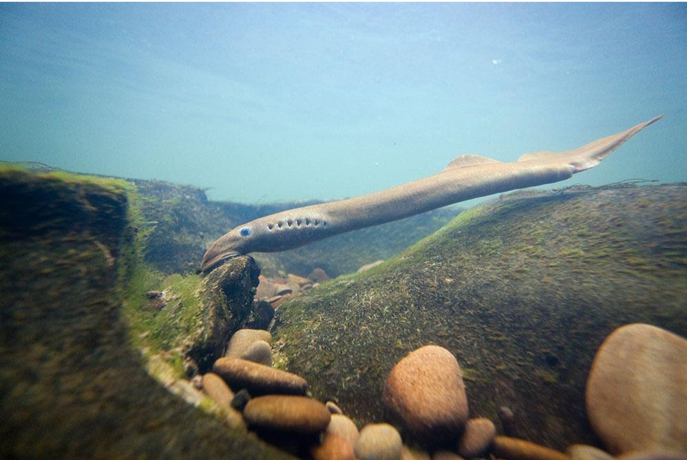
In addition to understanding the negative impacts for native animals that occur in the novel communities created by species introductions , Phil is interested in understanding how altered species interactions, particularly reduced positive interactions influence native species. In Northern California, Pacific Lamprey seasonally enter the coastal rivers in order to spawn. As part of his dissertation, Phil investigated how bioturbation during lamprey redd (spawning nest) construction influences invertebrate drift, juvenile Steelhead foraging behavior and growth potential, and the effects of built lamprey redds on local water velocity.
Phil and his collaborators Gabe Rossi and Sarah Kupferberg have found that drifting invertebrates are more numerous and more concentrated downstream of redd building lamprey, increasing the foraging profitability of juvenile steelhead. He also found that lampreys’ redds can create velocity refugia for aquatic species, as the flow velocity is lower in the bottom of the redd depression. Phil’s observations suggest that this lower flow velocity (as well as other properties of Lamprey redds) may be exploited by foothill yellow-legged frogs who the use the redds as egg mass deposition sites. Overall, Phil’s observations suggest a number of positive interactions that may alter the population dynamics of species interacting with spawning lamprey in the Eel River.
Phil is a former PhD student with Mary Power in Integrative Biology at University of California, Berkeley, and is now a Research Biologist in a Postdoc position with Ted Grantham in Environmental Science, Policy, and Management at UCB.
In his current position, Phil and Ted Grantham are investigating how water withdrawals for cannabis cultivation in the South Fork Eel River influence river flow, temperature, and aquatic organisms. They plan to model the impacts of withdrawals on flow and use these calculations to determine when and where river temperatures might be impacted. Using the results of their modeling work they will also study how changes in these physical characteristics will alter species distributions of aquatic organisms and key ecological interactions. Phil will also continue working with Dr. Mary Power to monitor the movement and distribution of invasive fish and frogs in the upper South Fork Eel River. This monitoring builds on the work he started during his PhD, and aims to determine what factors encourage the spread of native species and inhibit non-natives.
Eco-evolutionary dynamics of O. mykiss
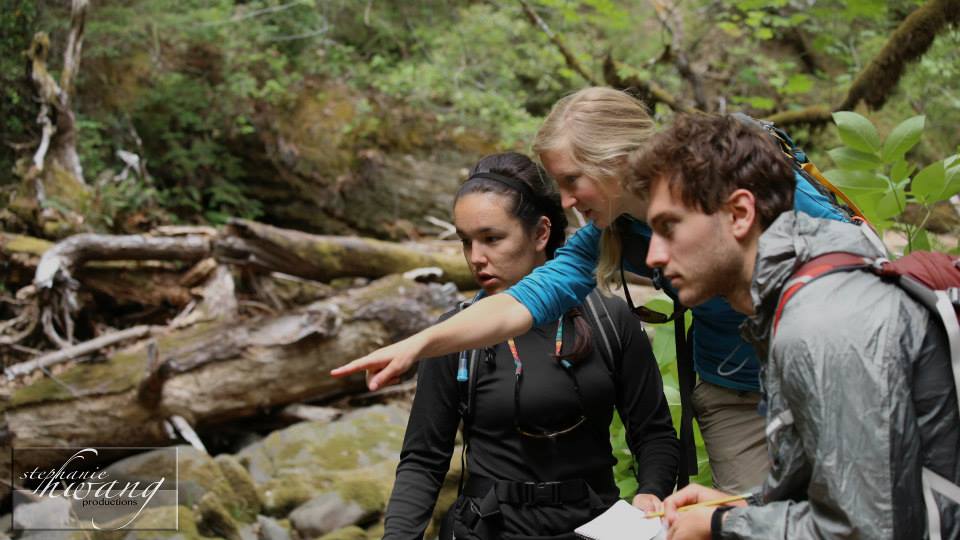

Suzanne studies the alternative life history strategies of Oncorhynchus mykiss. The migratory form (steelhead trout) spends 1-3 years in freshwater, migrates to the ocean to feed and grow, and then returns to freshwater to breed. The resident form (rainbow trout) completes its entire life cycle in freshwater. Each life history is associated with different trade-offs: the migratory steelhead can reach much larger body sizes and therefore be much more fecund than resident rainbow trout, but steelhead experience higher lifetime mortality rates. Suzanne is interested in the processes that maintain and constrain the life history diversity of O. mykiss at a fine spatial scale – within several replicate streams. Specifically, she is interested in how rainfall and flow patterns (timing and magnitude) influence the ability of migratory adults to ascend cascades, which influences the amount of gene flow between the alternative life histories in a given year. She explored how the presence of life history diversity alters the density and size structure of groups of O. mykiss that occupy these streams during a given year. As the top predator, O. mykiss assemblages of different density and size structure should have different effects on stream food webs. Through mark-and recapture studies, genotyping, and field observations, Suzanne studied the processes that maintain life history diversity and mediate its effects on stream ecology. Suzanne is a former PhD student advised by Stephanie Carlson in the Department of Environmental Science, Policy, and Management at UC Berkeley. She is now a Research Biologist with McBain Associates, Inc.
Mayfly migrations from mainstems to tributaries can sustain salmonid rearing in warming river networks
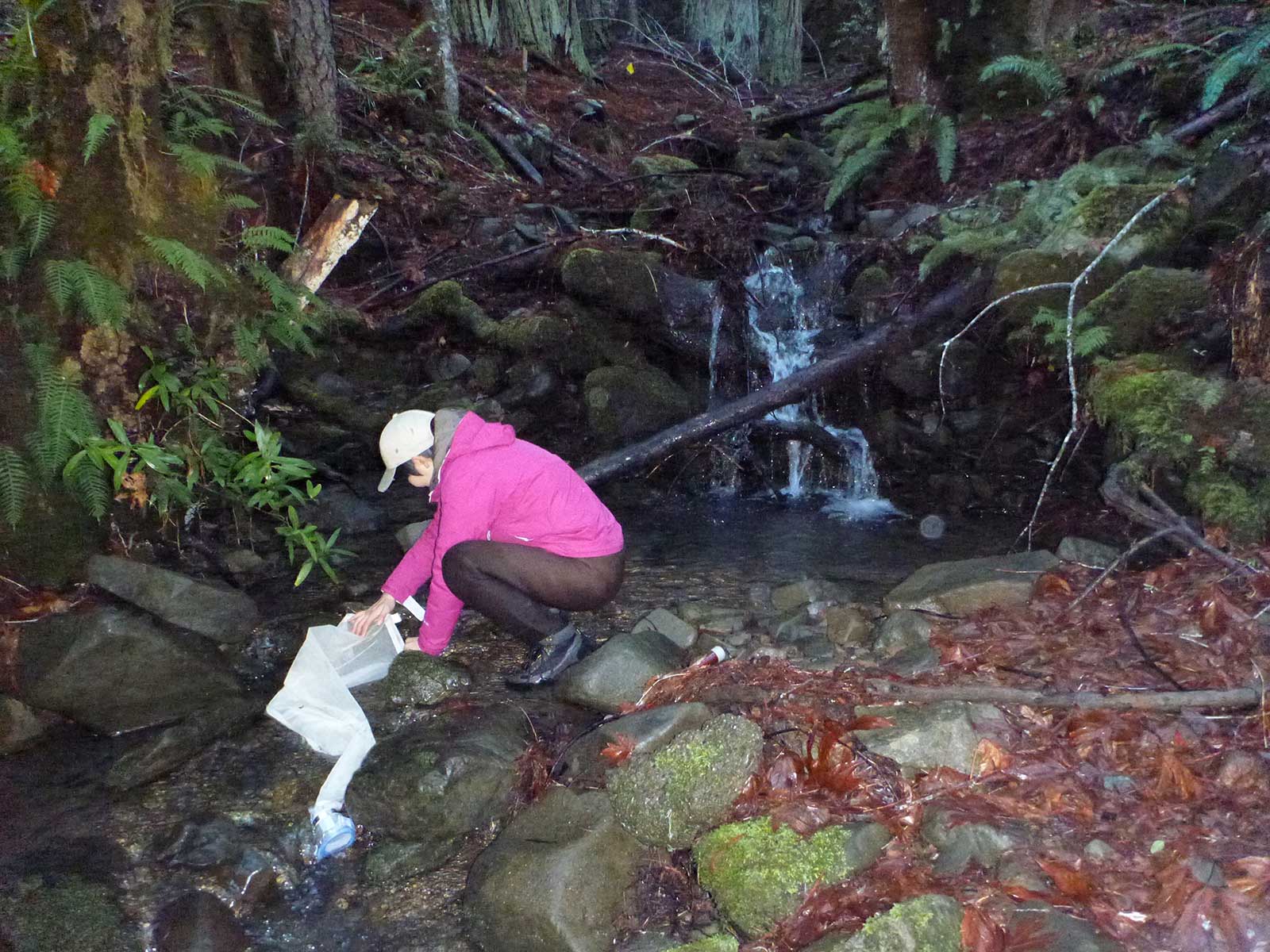
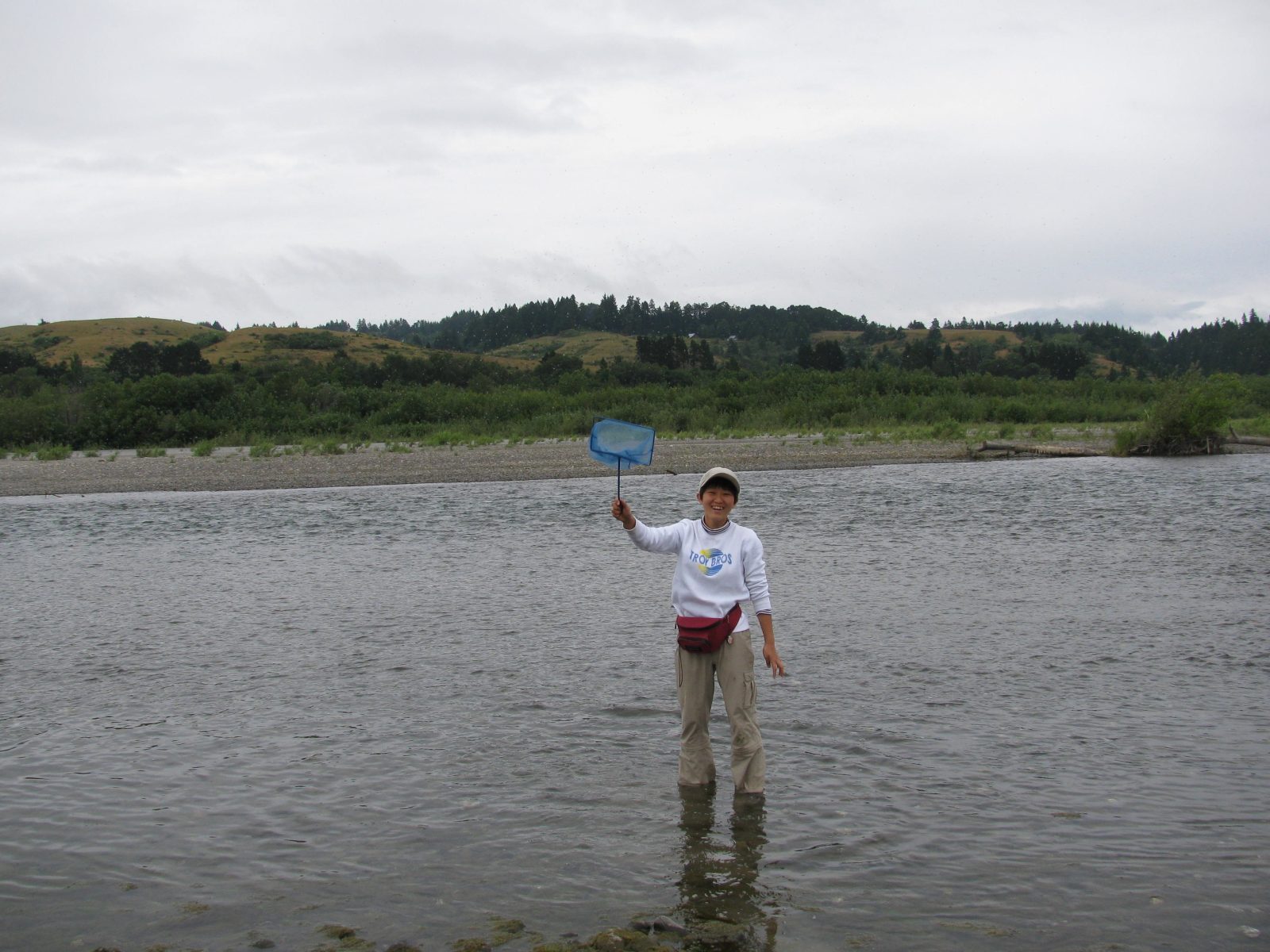
Hiromi Uno discovered that the mayfly, Ephemerella maculata (Ephemerellidae), has a life cycle migration may that help sustain steelhead populations in the warming Eel River. Every summer for twenty years, Angelo researchers puzzled over a mysterious phenomenon. For about a month, the pools of cool, large areas of pools in Fox Creek, a dark tributary stream near the researcher cabins, would become encrusted with dead insects. Hiromi looked more closely, and noticed that 1) they were almost all female mayflies, and 2) they were all a species, Ephemerella maculata, whose nymphs do not occur in these dark tributaries. After consulting an expert taxonomist, she was able to identify E.maculata nymphs, which are very different from the adults. She found that these nymphs only reared in the warm mainstem South Fork Eel, where they fed on abundant algae. Nymphs emerge in early summer, adult winged females mate, then swarm up dark, cool tributaries, where they plunge into white-water riffles, shed their eggs, and die. As spent mayflies drift into pools, juvenile steelhead and giant Pacific salamanders gorge themselves on their dead or moribund bodies. The egg masses, however, are not eaten, even when offered to predators experimentally. Egg masses look like small, translucent pieces of brown popcorn. They sink, stick to the stream bed, and go into a resting period (diapause) for many months, until the first winter rains, when they hatch and tiny, new nymphs are washed down into the mainstem.

Hiromi captured hatching and recently hatched egg cases of E. maculata as the first winter flood of swept them down the tributary into the mainstem South Fork Eel. This mainstem habitat warms over the spring and summer to become a productive habitat for mayfly nymphs, but stressful for cold-water steelhead trout (Oncorhyncus mykiss), which typically rear in rivers for one and half years before they migrate to the ocean. In warming rivers of Northern California, rearing juvenile steelhead are increasingly restricted to cool tributaries, where little food is produced. Hiromi’s experiments have shown that the upstream breeding migrations of E. maculata help sustain summer rearing by juvenile salmonids in cool tributary refuges where they would otherwise be food-limited. By transferring trophic subsidies from productive mainstems to food-limited tributaries, this mayfly could enhance the resilience of steelhead populations in the warming rivers of northern California. Hiromi was a Ph.D. student with Mary Power in the Dept. of Integrative Biology at UCB. She is currently a JSPS Postdoctoral Fellow at Hokkaido University.